
Big Plans for Beaver Creek

Updated: Jan 19
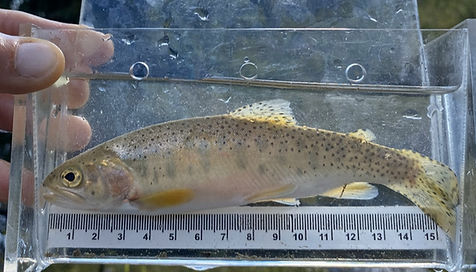
Beaver Creek is located in the Porcupine Hills, where the foothills meet the Rocky Mountains, a beautiful ecosystem that supports fish, wildlife and recreation. A portion of this creek is located within a Public Land Use Zone (PLUZ), where recreators enjoy hunting, fishing and off-roading. Outside of the PLUZ, Beaver Creek supports ranching and agriculture, and many families have lived along its reaches for decades. This watershed is also important for native fish, as it contains critical habitat for some of the easternmost populations of unhybridized Westslope Cutthroat Trout. These fish are one of four native trout species in Alberta, and are threatened by habitat degradation, introduced species and warming waters. Activities along Beaver Creek, both within and outside the PLUZ, have degraded riparian and stream habitat, further threatening Westslope Cutthroat Trout in the region.
Freshwater Conservation Canada is working with partners and landowners to address this degradation on public and private lands. In 2022, we contracted AJM Environmental Inc. to assess habitat conditions and identify suitable areas for restoration work. 35 sites were identified, and in June 2024, we visited them to assess their current conditions and prepare for future work in the region.
In 2024, we hosted a meeting in partnership with the Beaver Creek Watershed Group (BCWG), ALUS and Cows and Fish. At this meeting, each group presented to several landowners in the region on their work and the watershed's condition. We received inquiries from landowners after this meeting, expressing interest in restoration work on their properties; many have witnessed the decline in stream health firsthand. Our first restoration workday took place in November on a property where one landowner has been fighting infestations of burdock, an invasive plant, since she bought it in the 90s. The group removed 4 large garbage bags of burdock and examined additional sites for future restoration efforts. In one corner of the property, there was riparian damage from cattle watering in the creek, but we were pleased to see that the rest of the creek was relatively healthy and had significant beaver activity.
The burdock we removed, and some good-looking beaver dams along Beaver Creek!
In early 2025, we held a second meeting with landowners to discuss potential rehabilitation areas along Beaver Creek. We heard lots of great ideas for future efforts and have created a list of projects to tackle when time allows.
Later in the year, we surveyed 4 locations along beaver creek for Westslope Cutthroat Trout and found the threatened trout at each site! We collected a small tissue sample from the larger fish to be sent for genetic analysis. Since Westslope Cutthroat Trout can breed with introduced Rainbow Trout, determining the extent of hybridization is important when creating conservation plans for the species.
We also tackled the first big rehabilitation site in September, where we replaced a bridge on one of the off-highway vehicle (OHV) trails. The old bridge was too narrow and placed inconveniently on the creek, so many OHV users were driving through the creek, which is critical Westslope Cutthroat Trout habitat. The new bridge is wider and was installed over the previous ford to deter future trail users from driving in the creek. We also planted along the decommissioned section of trail to promote regrowth. With Cows and Fish, we planted 85 willows and shrubs planted to bolster the riparian area!


This conservation work is most impactful when paired with responsible recreation. If you recreate in the PLUZ please stay on designated off-highway vehicle trails and follow responsible angling practices to give the trout in Beaver Creek a fighting chance!
Our rehabilitation work in Beaver Creek is made possible thanks to a Fisheries and Oceans Canada Habitat Stewardship Program (HSP) grant and the Government of Alberta’s Watershed Resiliency and Restoration Program (WRRP). We are grateful to partner with Cows and Fish (Riparian Management Society) and the Oldman Watershed Council on this project. The Beaver Creek Watershed Group has also been a vital resource for bringing together and informing the local community. Freshwater Conservation Canada plans to continue to rehabilitation work in Beaver Creek in 2026 and will be hosting workdays for these projects so keep an eye on our Eventbrite if you want to get involved!


Comments