
Elk and Radiant Creek – A 2025 Field Season Recap
Decades of industrial activity, livestock grazing, the presence of feral horses, and recreational use have influenced Radiant and Elk Creek, two tributaries of the Clearwater River in Western Alberta. These activities degrade riparian areas and instream fish habitat that support native fish species, including Bull Trout, which are currently listed as threatened at the federal and provincial levels in Canada. Since 2019, Freshwater Conservation Canada has led restoration efforts to improve habitat in these creeks. Efforts have followed low-tech process-based restoration principles (LTPBR), which involve hand-building structures to promote stream-floodplain reconnection and habitat recovery. A combination of Beaver Dam Analogues (BDAs) and Post Assisted Log Structures (PALS) was installed on the two creeks to mimic natural wood accumulation and beaver dams.

In the 2024 field season, we saw new silt and gravel deposits and erosion surrounding the PALS built in previous years. One of the project's goals is to reconnect streams to their floodplains, and targeted erosion is an important step toward that goal.
These PALS and the hydraulic processes

They create and contribute to increased channel complexity and a wider variety of aquatic habitats. In 2024, eight more PALS and four BDAs were built on Radiant Creek, and four BDAs were built on Elk Creek. In 2025, we amplified the benefits of this work by repairing
structures and planting live willows on the
stream banks. At both Radiant Creek and Elk Creek, an exclusion fence was built to keep livestock and wild horses out of the project site. Wildlife cameras were also set up to monitor stream height changes induced by several spring snowfalls and to observe any animals that had entered the project area through an open fence.
In the 2025 field season, we repaired broken panels along the exclusion fence and downloaded the data from the wildlife cameras. We were excited to see two beavers swimming by one of the BDAs that we had built! They have completely taken over many of our structures, which have since grown.

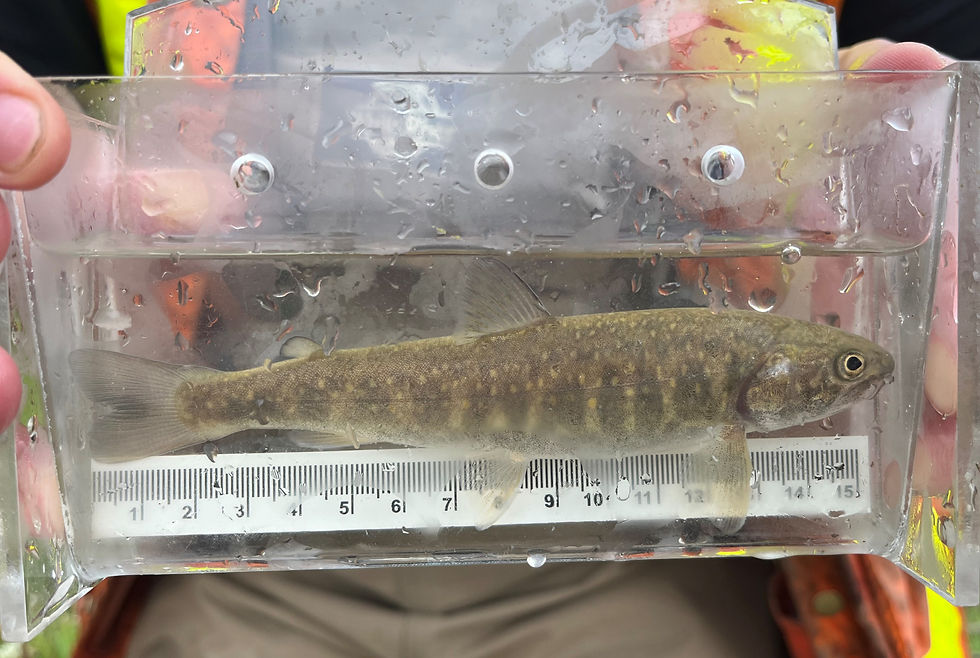
Every year since the implementation of the PALS and BDA structures, we have conducted a fish survey at Radiant Creek to assess changes in the fish community over time. When this study was first conducted in 2021, only two Brook Trout were captured within the project area. When we repeated this study in 2025, our staff caught one Bull Trout, fourteen Brook Trout, and three Longnose Dace. We are happy to see that the structures we have built are providing good habitat for the threatened Bull Trout at the restored site!
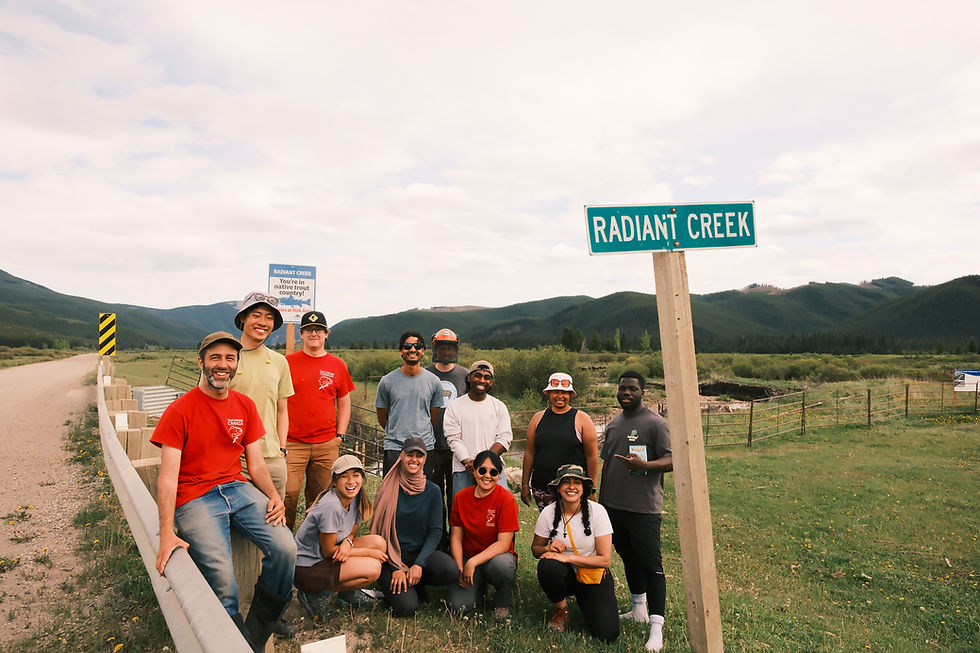
Much of this restoration work was completed with support from volunteers. Thank you to everyone who helped make this project a success! Work on the Radiant Creek was also completed in part thanks to Fisheries and Oceans Canada's Nature Legacy Fund. Freshwater Conservation Canada will continue work in the area in 2026 by finalizing restoration and monitoring the success of the BDAs and PALS.


Comments