
Impacts of Road Salt

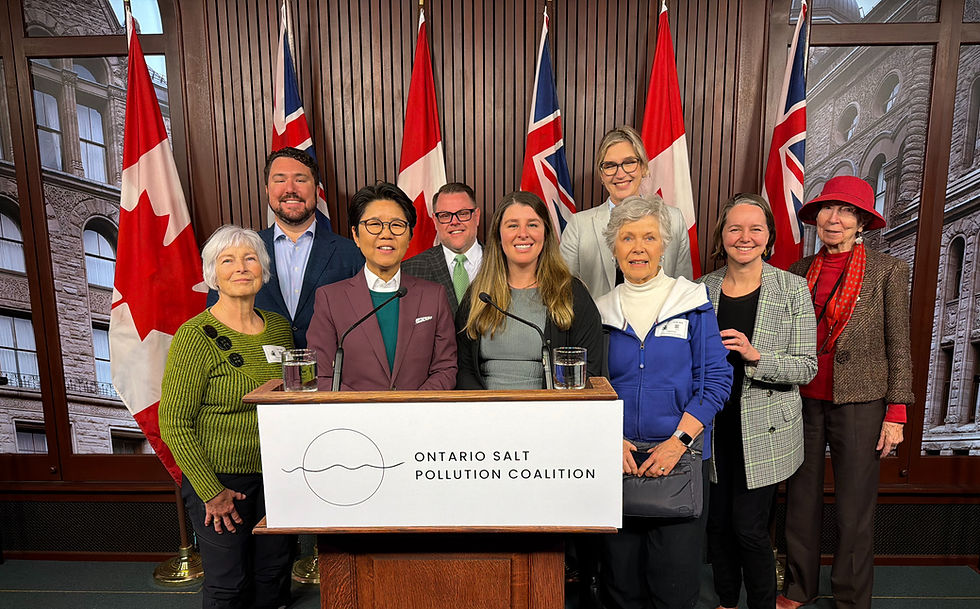
Freshwater Conservation Canada is pleased to share that we have joined the Ontario Salt Pollution Coalition (OSPC). The OSPC is coordinated by Water Watchers and comprises concerned individuals, community groups, and NGOs working to improve, affecting Ontario’s handling of salt pollution.
The Issue
Salts have long been used for de-icing roads, parking lots, and pathways. In fact, it’s estimated that Ontario uses more than 2 million tonnes of road salt per year. Although this salt is applied to surfaces to keep us safe, an unintended consequence is that too much salt is entering our waterways, affecting the health of freshwater ecosystems.
Over the past few decades, chloride concentrations in many of Ontario’s water resources, including groundwater aquifers, lakes, streams, and rivers, have been steadily increasing to the point that they sometimes exceed chronic toxicity levels for aquatic life. These high salt levels disrupt the delicate balance of these ecosystems, influencing food webs, degrading habitats, threatening freshwater biodiversity, and putting drinking water sources at risk.
Storm drains along roadways and in parking lots act as direct conduits to our rivers, lakes, and streams, carrying pollutants such as road salt that harm freshwater ecosystems.
Calling for Change
There is growing recognition that something needs to change. At the time of writing, 32 municipalities in Ontario have passed resolutions calling on the provincial government to address road salt pollution. In addition, Landscape Ontario, the trade association representing the snow and ice management sector, is also calling on the Province to take leadership on this issue.
Coalition members and supporters are asking the Province for immediate action on this issue. This includes addressing contractor liability challenges, instituting enforceable contractor training and certification and government-approved best management practices, establishing and funding a provincial stakeholder advisory committee to advise on the best courses of action to protect freshwater ecosystems and drinking water from the impacts of salt pollution.
Cut the Salt!
There are a variety of ways to reduce salt use while keeping people safe. For example, physical alternatives such as requiring the use of winter tires, increased plowing, or non-toxic alternatives to salt. Meanwhile, addressing liability issues would prevent over-salting.
You can learn more at the Ontario Salt Pollution Coalition website and the Watersheds Canada website.


Comments